
One day, I was in a leadership conference where there were only a few women present in a room full of men. I had been invited to come to this particular meeting because of a capacity I was involved in that dealt with helping people learn to be more self-sufficient. One of the problems that was brought to the agenda was that many of the people we were trying to help were having problems trusting those who were trying to help them.
The men were sitting there going over statistics and numbers and talking over all of these facts and figures that they felt that the group should share with those they were helping and I could feel the steam rising from the back of my head. I rose my hand and asked, “So, you’re having difficulty with people trusting you that you are trying to help? How do you approach them?” One of the older men stood up and said “I don’t approach them, I don’t feel comfortable talking to people who I don’t know well.”
Quite a few men in the audience nodded in agreement. I was flabbergasted. It was so ridiculous to me that these men were treating a very human issue with facts and numbers and were not even addressing the people that they were “trying” to help. People will not trust anyone that they do not feel any sort of connection to–even if that person’s intentions are pure.
Even if you have issues with something, as long as it’s not a medical condition for the most part, if you really want to, you can figure out a way to work around your weaknesses or discomforts if you want to change.
I used to be very shy.
So incredibly shy that when I would start at a new school, I would be very choked up and could hardly get myself to talk to anyone at first.
One day I read a book that changed my life and it’s funny because it was a self-help book called “Secrets of Loveliness”. In the book, the author discusses that shyness is a form of fear. I was taken aback from that and thought “What am I afraid of that makes me shy?” I decided I was probably that people wouldn’t like me but as I sat and reasoned through that thought, I realized that if I never spoke, they probably wouldn’t like me anyway.
Often, shy people get mistaken for snobs. This doesn’t mean that they are snobs at all, they may be the most lovely people you have ever met, but their non-engaging behavior can cause others to feel like they do not have an interest in any one besides themselves because they only keep to themselves.
I am a very introverted person and need very badly to recharge after being with people, but after years of practice, I have become quite out-going to those around me. It was something that I worked at for years but because I did work at it, I have become more skilled in conversing with other people and connecting with others around me.
When I was in that meeting, I was astonished that so many of these men were stuck in this box of believing they were a certain way and there was nothing that they could do to change it.
It also made me angry.
As I drove home, I ranted out loud to myself “You can Change!!!” “What’s the point of life if you don’t want to grow and evolve?!” “You can change!” That day was a turning point for me because I realized that one of my deepest core beliefs is that I believe in changing and evolving and becoming a better, happier, person each day.
Some things in life are unchangeable…natural hair and skin tone, height, bone structure, who your parents are, where you were born, how you were raised, your history…etc. Sometimes because of these unchangeable things in our lives, we get into our minds that other things are unchangeable too or that we are a certain way because of X, Y, Z and there’s nothing we can do about it.
I personally have certain things that are unchangeable that if I let them get to me, I can allow myself to feel very trapped.
I have a spinal fusion.
Getting my spine fused was a choice I made in my early twenties because my body was basically collapsing in on itself and I had 50% lung capacity. I had done what I understood I could do to help my body up to that point when I slipped my disk, but my knowledge was perhaps limited. I did the best I knew how to do.
I cannot do certain things with my body that I used to be able to do. There are no more cartwheels or playing hands-up stands up with my kids—unless I just play the ‘judge’. I can only bend from my hips and not my waist. I have very little control over the way my bone structure with rods makes my posture look. I can let this bother me and allow the frustration this causes me to bog me down, or I can focus on the things I can change and the other aspects of my life and become the person I want to be and live the life I want to live despite my physical limitations.
There are so many more things in life that are changeable than unchangeable…how and what you eat, sleeping habits, how often you exercise, education gained, talents developed, skills obtained, how rude or friendly you are, your perspective on life, how much patience you acquire through practice, if you meditate, if you read or don’t, what you read, what you watch, how open to new things or ideas you are, how financially savvy you are,…etc.
Many of the things that are changeable if not all of them come down to choices you make with how you spend your time.
I hold the deep belief that, unless you are on your death bed, there are things that you can do to improve your quality of life. It’s of course just my opinion so you would have to try to test out my hypothesis to see if it works out for you in your life—but it’s worth a try.
If you want to gain new skills or new habit, there are a few basic things that you can incorporate into your life to help you become a person with that skill or habit.
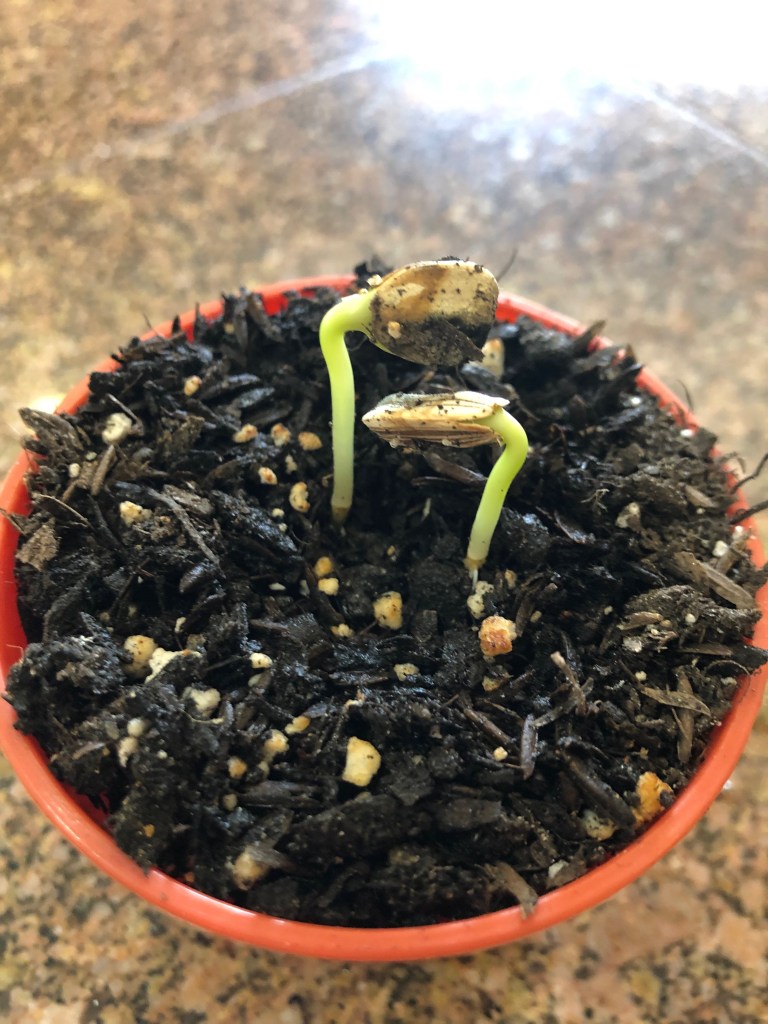
Just as seedlings require certain care, so do our habits.
I have a private music studio where I teach music lessons in piano, violin, viola and voice weekly to a few dozen students. I have been teaching private lessons for a little over two decades and after that many years of experience and practice teaching, I have learned a few things about the process of learning a new skill…. particularly in music but these principles apply to all skills.
At the beginning of August, I started my new semester and began teaching a handful of brand-new students. Though every child I teach is a very different person, there are a few things I require of all of my students and for very specific reasons.
The first thing I require is that my students practice a minimum of 90 minutes a week. I’ve learned that it takes at least this much time of dedication to create the momentum to keep motivation to continually progress when learning a new skill.
For some people it takes less time, but most people need at least that 90 minutes of weekly devotion to keep up momentum. When I have wanted to start a new habit, it has taken at least 90 minutes a week of consistency to build that habit. For example, when I work out three times a week for 30 minutes the next week, I feel better continuing that practice. When I don’t plan for at least three days, life gets in the way-and though it may stay in the back of my mind that I want to improve my strength-I just don’t end up making it happen.
I’ve been taking watercolor classes for the past year and it’s the weeks that I put a little time in each day for my art that I improve.
The most difficult reason why practice of any skill gets daunting is that creating habits can seem overwhelming. Probably 80-90% of what we do each day is just out a pure habit so learning new habits can be tricky.
So, the first thing that someone needs to do, is:
- Schedule when to put in your weekly 90 minutes of practice for the week
For my students, usually they are quite young so their attention spans are smaller so breaking up practice into one 15-minute session daily or even two eight-minute sessions is much easier for them.
You’ve heard the saying that we are creatures of habit and that is so true. If we want to make these practice sessions consistent, we need to create some kind of habit surrounding the practice so it just becomes part of who we are.
The easiest way to turn a practice schedule into a habit, I have learned, is to pair it with a habit that you already have. Gretchen Rubin discusses this in her book “Better Than Before” in more detail. I have used this tool naturally in my life before I knew there was a name for it. In the simplest terms if you want to pair a new habit with an already established habit you can say to yourself, “When I do_______(whatever the original habit is) I will immediately practice following it.” or the reverse which is “Before I do ________ (the already developed habit) I will practice.”
For example, there was a time in my life when I was in high school, when I was very busy but didn’t have an after-school job so I would practice when I first walked in the door. This was a great time for me to practice because it helped me decompress from the day and primed my mind to dive into homework afterwards. It felt like a release for me to be able to just saturate myself in the music. My habit pairing was that when I got home, I would sit right down at the piano and play.
I have some students who practice right after they eat breakfast in the morning…of course you’d have to make sure that you are giving yourself enough time to get ready to do this but it makes for a good start to the day to have already accomplished something and dabbled in something that you enjoy first thing in the morning.
I have other students who practice while their mom prepares the family meal—this is what my own children do because it’s a good time for me to overhear their practice. During college when I practiced a lot, one pairing that I did was to practice as soon as I had brushed my teeth for bed so that while I slept my subconscious mind could continue go to work on the areas that needed more help throughout the night (the only somewhat negative thing about this depending on your perspective is sometimes I would get on a roll and want to continue practicing pretty late into the night—thank goodness for practice mutes).
I’ve learned that for me a good pairing for exercise (because I have young children at home and I prefer to workout at home rather than going to the gym) is best in the morning. When I have created the habit that when I wake up bright and early in the morning, before anyone else wakes, if the first thing I do is put on my workout clothes and walk downstairs and immediately start my exercise, it gets done.
So that pairing is that I just work out as soon as I wake up. This works best for me, because as soon as I start cooking, cleaning or looking at my phone or helping a child, I get so sidetracked that the window of time I had to exercise may or may not end up being there.
I have to schedule in what is important to me and just make it happen or it does not happen. In order to schedule what is important to me, I have to know my weaknesses and one of my weaknesses is getting side-tracked by all the ‘other’ things there are that need to get done in the day. Especially with four children, there is a lot for me to do, and if I want to get something done, I have to figure out where to put that in my day.
- Prepare to practice before the scheduled time
Just the act of pulling out the music to practice is a positive move because it trains the brain that this is a something we are committed to.
Keeping music in an easy to reach place is a really good practice. Having a bookcase, magazine rack, dresser or table with a designated drawer near the piano where you practice is a great place to keep music.
I actually have a dresser in my front room that my own children have their own designated drawer. In it that drawer, they keep their school books, papers and music books. We do have to clean their drawers pretty often (probably bi-weekly or monthly) but it keeps things looking neat and tidy when they are not in use.
It’s the same when I exercise, if I just prepare to exercise, by laying out my clothes the night before, the likelihood of my working out goes up probably 25%. If I put on the clothes when I first wake up, my likelihood goes up about 50-75%. These are not hard numbers, just estimates but you get the idea.
Often, we want things to be a “certain way” before we feel like it will be the correct situation to do something.
Do not let the desire for things to be “perfect” to start working on your skill because it will never be “ideal” or “perfect” to do things that cause growth. This is self-sabotaging thinking and it will hinder your progress before you even begin. Do yourself a favor and just do the best you can to have things in a place where you need them and then when it is “go” time, sit down and just do it.
- Seven is a magic number
Seven is my favorite number. When I studied education psychology, I learned about George Miller’s article called “The Magical Number Seven, Plus or Minus Two: Some limits on our Capacity for Processing information.” https://www.simplypsychology.org/short-term-memory.html In the article, Miller discusses how people can generally retain seven things plus or minus two.
This theory has been tested and proven repeatedly and is generally accepted universally. Try experimenting with this concept when you go grocery shopping (though it might prove expensive—I may or may not have personal experience with this). You can usually remember five items you need, but add more than that and you may forget and really need a shopping list.
Personally, I may have a poor short-term memory because I get especially distracted at the store (though possibly that is the nature of stores and they are designed that way on purpose?). That’s why, if I bring children with me to the store and I forgot to bring a list, I usually ask them each to remember a couple of items that I need to buy. That way, we can remember more things.
The brain is a muscle and the more that we practice remembering seven things, the easier it becomes. When a student is learning a difficult passage—we start from one note and go to the next—usually in chunks that are small. This helps them first learn it for their short-term memory but if they practice that small part at least seven times…it starts moving into the long-term memory.
I also like the number seven because if you need to do something seven times, it does not seem as big and daunting as say ten and it gets you to enough repetitions that you can really start making progress when you practice something that many times. I ask my students to play through their pieces seven times a day or each passage seven times a day and if they’ve practiced that it for more than three days, they have moved it to 21 times of practicing that passage.
They say 21 times of something creates a habit…and creating a habit of practice will keep the momentum of progress. Some changes and skills are immediate, however, more often than not, most skills take nurture, time and consistency to build up.
- Learn to memorize
The mind is a muscle. What we use it for consistently will become habitual and easier to do. The more we practice memorizing, the better we get at memorizing. My first violin teacher did not require memorization until I started getting into competitions that required memorization. It was so incredibly difficult for me to memorize because I had not learned how to memorize from the beginning of lessons.
I require my students to memorize throughout the year from the first lesson on. At first their pieces are just 10 seconds or less so of a pattern and then they turn into a melody. The more we memorize, the easier it gets but if you try to do it all at once, it can get incredibly daunting. Learning to memorize when it comes to music, begins with analyzing and synthesizing patterns and repeating it enough times that your body creates muscle memory.
Once the body has that muscle memory, you don’t have to think through the entire pattern or the entire piece in great detail—however you are still in control of making artistic decisions as to how you present your piece.
Memorization works a little differently in other topics because say in a subject at school it can mean pure recall though if you add movement or another sense with it, you will create more synaptic connections that will help your memories be strengthened. For example, if I want to memorize how to create a recipe, I will make faster connections and submit that recipe to memory more fully and quickly if I actually put the recipe together a few times rather than just try to memorize a recipe card.
Doing something is the most powerful way to learn how to do that thing.
- Challenge yourself
One thing that I really like to do with my students is to challenge them. “Plus one” is an educational psychology concept that if we present students with modest challenges or the next level up from where they currently are, they will be motivated them to achieve higher levels. It needs to be an achievable challenge so it doesn’t get too overwhelming for a student. When we challenge students with something and they achieve that challenge, the motivation for learning increases exponentially.
For younger, or new students, memorization alone is a great challenge that once they achieve memorization of a piece, they are rewarded intrinsically and become more motivated to continue learning. I also, offer stickers to students who memorize as a visual reminder of how many pieces they have memorized because it makes them feel successful as they memorize more and more.
Plus stickers are fun.
I get stickers for the kids that interest them the best I can. At the moment I have Minecraft, Lisa frank, Star Wars, Fort Nite, Emoji, Princess, food, animal, galaxy, avengers, unicorn and spider man stickers in my drawer to pick from to name a few. Even some of the teenagers I teach are still motivated by getting a new sticker to signify their memorized pieces.
For older students, I like to do different time-based challenges related to practice. I have done either a set amount of time achieved in practice through a semester (in a 15/16-week semester I often have challenged them to 50 hours of practice challenge). Another challenge I have had my students try are 50-days of practice challenges and 100-days of practice challenges.
Both of these have brought fabulous results with my students—not just because they practice a lot but because through that practice, they become more proficient and that proficiency is motivating and increases their learning momentum. I myself am way more motivated to do things when I have a challenge that I want to achieve. If I want to eat healthier—I do much better committing to a Whole30 than just saying I’m going to eat healthier.
When I’ve wanted to get into better shape and challenged myself to 50 workouts in 90 days, I have been much more motivated to exercise and actually just find myself more excited to do the work. I actually reward my own progress each day by putting a cute sticker on my calendar to mark when I have worked out because when I have those visual reminders it is much easier to want to continue my challenge because I can “see” the progress.
In conclusion: Any skill or habit you want to obtain takes time, thought and planning.
By planning, preparing, practicing, repetition and memorization, that skill becomes a part of you. It’s not super glamorous or earth-shattering news but it helps to be reminded that step by step is the only way to hike a mountain.
I could have written an exhaustive list but honestly, if you can remember those five steps its much better than if I had given you a much longer list of a bunch of points that will be harder to remember and these are the very basics to learning any skill.
 The Fused Mama