
Creating Habits to Create Change

One day, I was in a leadership conference where there were only a few women present in a room full of men. I had been invited to come to this particular meeting because of a capacity I was involved in that dealt with helping people learn to be more self-sufficient. One of the problems that was brought to the agenda was that many of the people we were trying to help were having problems trusting those who were trying to help them.

The men were sitting there going over statistics and numbers and talking over all of these facts and figures that they felt that the group should share with those they were helping and I could feel the steam rising from the back of my head. I rose my hand and asked, “So, you’re having difficulty with people trusting you that you are trying to help? How do you approach them?” One of the older men stood up and said “I don’t approach them, I don’t feel comfortable talking to people who I don’t know well.”

Quite a few men in the audience nodded in agreement. I was flabbergasted. It was so ridiculous to me that these men were treating a very human issue with facts and numbers and were not even addressing the people that they were “trying” to help. People will not trust anyone that they do not feel any sort of connection to–even if that person’s intentions are pure.

Even if you have issues with something, as long as it’s not a medical condition for the most part, if you really want to, you can figure out a way to work around your weaknesses or discomforts if you want to change.

I used to be very shy.

So incredibly shy that when I would start at a new school, I would be very choked up and could hardly get myself to talk to anyone at first.

One day I read a book that changed my life and it’s funny because it was a self-help book called “Secrets of Loveliness”. In the book, the author discusses that shyness is a form of fear. I was taken aback from that and thought “What am I afraid of that makes me shy?” I decided I was probably that people wouldn’t like me but as I sat and reasoned through that thought, I realized that if I never spoke, they probably wouldn’t like me anyway.

Often, shy people get mistaken for snobs. This doesn’t mean that they are snobs at all, they may be the most lovely people you have ever met, but their non-engaging behavior can cause others to feel like they do not have an interest in any one besides themselves because they only keep to themselves.

I am a very introverted person and need very badly to recharge after being with people, but after years of practice, I have become quite out-going to those around me. It was something that I worked at for years but because I did work at it, I have become more skilled in conversing with other people and connecting with others around me.

When I was in that meeting, I was astonished that so many of these men were stuck in this box of believing they were a certain way and there was nothing that they could do to change it.

It also made me angry.

As I drove home, I ranted out loud to myself “You can Change!!!” “What’s the point of life if you don’t want to grow and evolve?!” “You can change!” That day was a turning point for me because I realized that one of my deepest core beliefs is that I believe in changing and evolving and becoming a better, happier, person each day.

Some things in life are unchangeable…natural hair and skin tone, height, bone structure, who your parents are, where you were born, how you were raised, your history…etc. Sometimes because of these unchangeable things in our lives, we get into our minds that other things are unchangeable too or that we are a certain way because of X, Y, Z and there’s nothing we can do about it. 

I personally have certain things that are unchangeable that if I let them get to me, I can allow myself to feel very trapped. 

I have a spinal fusion. 

Getting my spine fused was a choice I made in my early twenties because my body was basically collapsing in on itself and I had 50% lung capacity.  I had done what I understood I could do to help my body up to that point when I slipped my disk, but my knowledge was perhaps limited.  I did the best I knew how to do. 

I cannot do certain things with my body that I used to be able to do.  There are no more cartwheels or playing hands-up stands up with my kids—unless I just play the ‘judge’.  I can only bend from my hips and not my waist.  I have very little control over the way my bone structure with rods makes my posture look.  I can let this bother me and allow the frustration this causes me to bog me down, or I can focus on the things I can change and the other aspects of my life and become the person I want to be and live the life I want to live despite my physical limitations.

There are so many more things in life that are changeable than unchangeable…how and what you eat, sleeping habits, how often you exercise, education gained, talents developed, skills obtained, how rude or friendly you are, your perspective on life, how much patience you acquire through practice, if you meditate, if you read or don’t,  what you read, what you watch, how open to new things or ideas you are, how financially savvy you are,…etc. 

Many of the things that are changeable if not all of them come down to choices you make with how you spend your time.

I hold the deep belief that, unless you are on your death bed, there are things that you can do to improve your quality of life.  It’s of course just my opinion so you would have to try to test out my hypothesis to see if it works out for you in your life—but it’s worth a try.

If you want to gain new skills or new habit, there are a few basic things that you can incorporate into your life to help you become a person with that skill or habit.
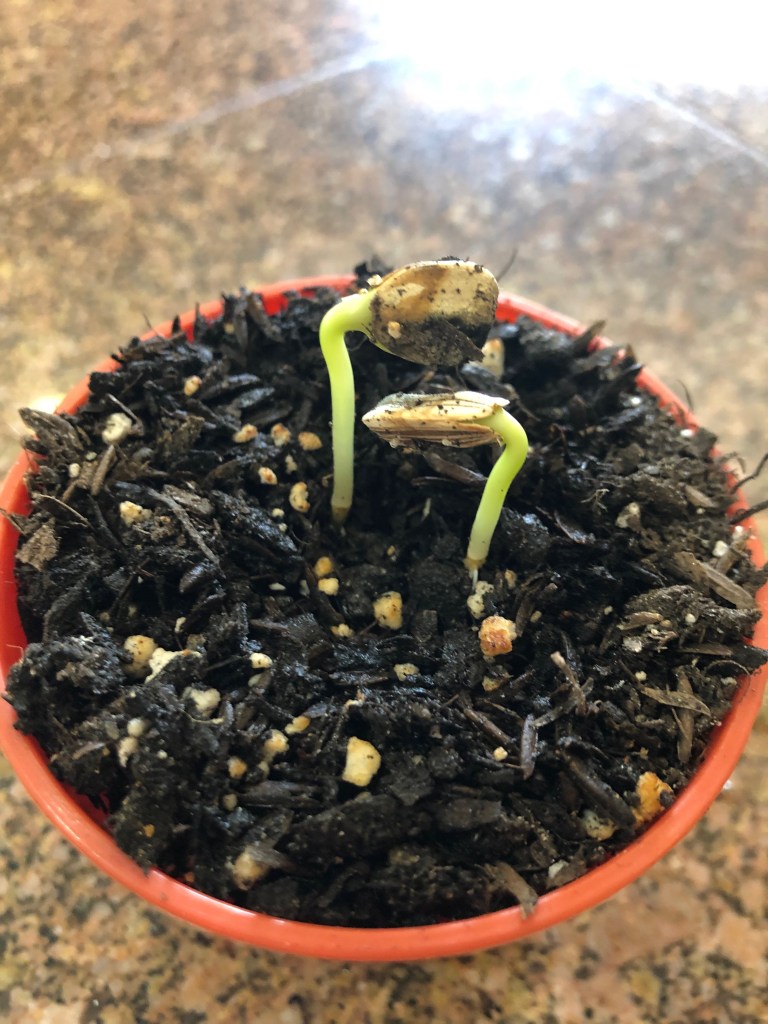
Just as seedlings require certain care, so do our habits.

I have a private music studio where I teach music lessons in piano, violin, viola and voice weekly to a few dozen students. I have been teaching private lessons for a little over two decades and after that many years of experience and practice teaching, I have learned a few things about the process of learning a new skill…. particularly in music but these principles apply to all skills.

At the beginning of August, I started my new semester and began teaching a handful of brand-new students. Though every child I teach is a very different person, there are a few things I require of all of my students and for very specific reasons.

The first thing I require is that my students practice a minimum of 90 minutes a week. I’ve learned that it takes at least this much time of dedication to create the momentum to keep motivation to continually progress when learning a new skill.

For some people it takes less time, but most people need at least that 90 minutes of weekly devotion to keep up momentum. When I have wanted to start a new habit, it has taken at least 90 minutes a week of consistency to build that habit. For example, when I work out three times a week for 30 minutes the next week, I feel better continuing that practice. When I don’t plan for at least three days, life gets in the way-and though it may stay in the back of my mind that I want to improve my strength-I just don’t end up making it happen. 

I’ve been taking watercolor classes for the past year and it’s the weeks that I put a little time in each day for my art that I improve.

The most difficult reason why practice of any skill gets daunting is that creating habits can seem overwhelming. Probably 80-90% of what we do each day is just out a pure habit so learning new habits can be tricky.

So, the first thing that someone needs to do, is:

  1. Schedule when to put in your weekly 90 minutes of practice for the week

For my students, usually they are quite young so their attention spans are smaller so breaking up practice into one 15-minute session daily or even two eight-minute sessions is much easier for them.

You’ve heard the saying that we are creatures of habit and that is so true. If we want to make these practice sessions consistent, we need to create some kind of habit surrounding the practice so it just becomes part of who we are.

The easiest way to turn a practice schedule into a habit, I have learned, is to pair it with a habit that you already have. Gretchen Rubin discusses this in her book “Better Than Before” in more detail.  I have used this tool naturally in my life before I knew there was a name for it.  In the simplest terms if you want to pair a new habit with an already established habit you can say to yourself, “When I do_______(whatever the original habit is) I will immediately practice following it.” or the reverse which is “Before I do ________ (the already developed habit) I will practice.”

For example, there was a time in my life when I was in high school, when I was very busy but didn’t have an after-school job so I would practice when I first walked in the door. This was a great time for me to practice because it helped me decompress from the day and primed my mind to dive into homework afterwards. It felt like a release for me to be able to just saturate myself in the music. My habit pairing was that when I got home, I would sit right down at the piano and play. 

I have some students who practice right after they eat breakfast in the morning…of course you’d have to make sure that you are giving yourself enough time to get ready to do this but it makes for a good start to the day to have already accomplished something and dabbled in something that you enjoy first thing in the morning.

I have other students who practice while their mom prepares the family meal—this is what my own children do because it’s a good time for me to overhear their practice. During college when I practiced a lot, one pairing that I did was to practice as soon as I had brushed my teeth for bed so that while I slept my subconscious mind could continue go to work on the areas that needed more help throughout the night (the only somewhat negative thing about this depending on your perspective is sometimes I would get on a roll and want to continue practicing pretty late into the night—thank goodness for practice mutes).

I’ve learned that for me a good pairing for exercise (because I have young children at home and I prefer to workout at home rather than going to the gym) is best in the morning. When I have created the habit that when I wake up bright and early in the morning, before anyone else wakes, if the first thing I do is put on my workout clothes and walk downstairs and immediately start my exercise, it gets done.

So that pairing is that I just work out as soon as I wake up. This works best for me, because as soon as I start cooking, cleaning or looking at my phone or helping a child, I get so sidetracked that the window of time I had to exercise may or may not end up being there.

I have to schedule in what is important to me and just make it happen or it does not happen. In order to schedule what is important to me, I have to know my weaknesses and one of my weaknesses is getting side-tracked by all the ‘other’ things there are that need to get done in the day. Especially with four children, there is a lot for me to do, and if I want to get something done, I have to figure out where to put that in my day.

  • Prepare to practice before the scheduled time

Just the act of pulling out the music to practice is a positive move because it trains the brain that this is a something we are committed to.

Keeping music in an easy to reach place is a really good practice.  Having a bookcase, magazine rack, dresser or table with a designated drawer near the piano where you practice is a great place to keep music.   

I actually have a dresser in my front room that my own children have their own designated drawer.  In it that drawer, they keep their school books, papers and music books.  We do have to clean their drawers pretty often (probably bi-weekly or monthly) but it keeps things looking neat and tidy when they are not in use.

It’s the same when I exercise, if I just prepare to exercise, by laying out my clothes the night before, the likelihood of my working out goes up probably 25%. If I put on the clothes when I first wake up, my likelihood goes up about 50-75%.  These are not hard numbers, just estimates but you get the idea.

Often, we want things to be a “certain way” before we feel like it will be the correct situation to do something. 

Do not let the desire for things to be “perfect” to start working on your skill because it will never be “ideal” or “perfect” to do things that cause growth.  This is self-sabotaging thinking and it will hinder your progress before you even begin.  Do yourself a favor and just do the best you can to have things in a place where you need them and then when it is “go” time, sit down and just do it.

  • Seven is a magic number

Seven is my favorite number.  When I studied education psychology, I learned about George Miller’s article called “The Magical Number Seven, Plus or Minus Two: Some limits on our Capacity for Processing information.” https://www.simplypsychology.org/short-term-memory.html In the article, Miller discusses how people can generally retain seven things plus or minus two. 

This theory has been tested and proven repeatedly and is generally accepted universally.  Try experimenting with this concept when you go grocery shopping (though it might prove expensive—I may or may not have personal experience with this).  You can usually remember five items you need, but add more than that and you may forget and really need a shopping list. 

Personally, I may have a poor short-term memory because I get especially distracted at the store (though possibly that is the nature of stores and they are designed that way on purpose?).  That’s why, if I bring children with me to the store and I forgot to bring a list, I usually ask them each to remember a couple of items that I need to buy.  That way, we can remember more things.

The brain is a muscle and the more that we practice remembering seven things, the easier it becomes.  When a student is learning a difficult passage—we start from one note and go to the next—usually in chunks that are small.  This helps them first learn it for their short-term memory but if they practice that small part at least seven times…it starts moving into the long-term memory.

I also like the number seven because if you need to do something seven times, it does not seem as big and daunting as say ten and it gets you to enough repetitions that you can really start making progress when you practice something that many times.  I ask my students to play through their pieces seven times a day or each passage seven times a day and if they’ve practiced that it for more than three days, they have moved it to 21 times of practicing that passage. 

They say 21 times of something creates a habit…and creating a habit of practice will keep the momentum of progress.  Some changes and skills are immediate, however, more often than not, most skills take nurture, time and consistency to build up.

  • Learn to memorize

The mind is a muscle.  What we use it for consistently will become habitual and easier to do.  The more we practice memorizing, the better we get at memorizing.  My first violin teacher did not require memorization until I started getting into competitions that required memorization.  It was so incredibly difficult for me to memorize because I had not learned how to memorize from the beginning of lessons. 

I require my students to memorize throughout the year from the first lesson on.  At first their pieces are just 10 seconds or less so of a pattern and then they turn into a melody.  The more we memorize, the easier it gets but if you try to do it all at once, it can get incredibly daunting.  Learning to memorize when it comes to music, begins with analyzing and synthesizing patterns and repeating it enough times that your body creates muscle memory. 

Once the body has that muscle memory, you don’t have to think through the entire pattern or the entire piece in great detail—however you are still in control of making artistic decisions as to how you present your piece. 

Memorization works a little differently in other topics because say in a subject at school it can mean pure recall though if you add movement or another sense with it, you will create more synaptic connections that will help your memories be strengthened.  For example, if I want to memorize how to create a recipe, I will make faster connections and submit that recipe to memory more fully and quickly if I actually put the recipe together a few times rather than just try to memorize a recipe card. 

Doing something is the most powerful way to learn how to do that thing.

  •  Challenge yourself

One thing that I really like to do with my students is to challenge them. “Plus one” is an educational psychology concept that if we present students with modest challenges or the next level up from where they currently are, they will be motivated them to achieve higher levels. It needs to be an achievable challenge so it doesn’t get too overwhelming for a student. When we challenge students with something and they achieve that challenge, the motivation for learning increases exponentially.

For younger, or new students, memorization alone is a great challenge that once they achieve memorization of a piece, they are rewarded intrinsically and become more motivated to continue learning. I also, offer stickers to students who memorize as a visual reminder of how many pieces they have memorized because it makes them feel successful as they memorize more and more.

Plus stickers are fun.

I get stickers for the kids that interest them the best I can. At the moment I have Minecraft, Lisa frank, Star Wars, Fort Nite, Emoji, Princess, food, animal, galaxy, avengers, unicorn and spider man stickers in my drawer to pick from to name a few. Even some of the teenagers I teach are still motivated by getting a new sticker to signify their memorized pieces.

For older students, I like to do different time-based challenges related to practice. I have done either a set amount of time achieved in practice through a semester (in a 15/16-week semester I often have challenged them to 50 hours of practice challenge). Another challenge I have had my students try are 50-days of practice challenges and 100-days of practice challenges.

Both of these have brought fabulous results with my students—not just because they practice a lot but because through that practice, they become more proficient and that proficiency is motivating and increases their learning momentum. I myself am way more motivated to do things when I have a challenge that I want to achieve. If I want to eat healthier—I do much better committing to a Whole30 than just saying I’m going to eat healthier.

When I’ve wanted to get into better shape and challenged myself to 50 workouts in 90 days, I have been much more motivated to exercise and actually just find myself more excited to do the work. I actually reward my own progress each day by putting a cute sticker on my calendar to mark when I have worked out because when I have those visual reminders it is much easier to want to continue my challenge because I can “see” the progress.

In conclusion:  Any skill or habit you want to obtain takes time, thought and planning.

By planning, preparing, practicing, repetition and memorization, that skill becomes a part of you.  It’s not super glamorous or earth-shattering news but it helps to be reminded that step by step is the only way to hike a mountain. 

I could have written an exhaustive list but honestly, if you can remember those five steps its much better than if I had given you a much longer list of a bunch of points that will be harder to remember and these are the very basics to learning any skill.

Just Breathe.

Breath

The beginning of a life

and the end is marked

by its presence or absence

                                –Heather Meyers

Trees are a visual reminder that we need to fill our lungs fully with breath to hold up.

Breath is the most basic function in life. Ironically, though basic, it is at times, the one thing that helps us get through certain moments in our lives.

When I woke from my spinal fusion surgery to correct my scoliosis, I woke from the strangest dream I had ever had. I was dreaming that I was Cinderella and that my step-sisters were putting me into a corset and turning a dial to make me taller and taller. It was so incredibly painful that I was gasping and trying to cry out in desperation for them to stop but I couldn’t speak; however, they just laughed and scoffed at me that now I would be too tall for the prince. (I kind of blame this particular dream on my request to listen to Mozart continually on a CD during my surgery. Though in all honesty, I wonder if that also had something to do with the level of success that the surgeon had in my amount of correction. My Doctor had been enthusiastic and pleased that I was the first patient he had been able to get that close to straight with my degree of curvature…but I digress.)

Once I became conscious and the room was still black to me, which is always how it has been after I’ve been under general anesthesia, I became aware that my husband and my mother were leaning over me with pieces of ice in their hands gently rubbing my face with the cold chunks. I had been laying on my face for over 14 hours with tubing down my throat and in my nose and my face was swollen beyond recognition from the pressure. I felt absolutely dreadful and wanted to cry but my throat was so raw and dry that making sound was unpleasant too. The worst of it was that every single breath was like being on a rack with screws pulling at my muscles and the pain was a sort of indescribable torture.

As my vision returned, my parents and husband briefed me about my surgery and how successful it had been. I was told that my surgeon had felt that this was an extraordinarily successful surgery and that, so as not to mess anything up, I was not to move a muscle until someone taught me how to properly get out of bed. So, by now, because this was my second surgery and those had been my orders three days prior with my first surgery, I hadn’t moved for four days. Oh, and by the way, the surgeon had decided that breaking some of my ribs would help him get better correction so the pain when I breathed might be partially attributed to that. I also had had to have 14 units of blood, 7 units of platelets and 2 of plasma.

I’m not sure how long my family was with me after I had finally come to, but it did not feel long when a nurse came in and commented that visiting hours for the ICU were almost over. I felt helpless, stuck and abandoned.

The nurse invited everyone to leave and explained again that I better not move a muscle. I couldn’t eat or drink anything and that I could only have 30 ml’s of ice an hour (which is about 2 tablespoons). To someone who had such a swollen esophagus, this sounded like a punishment. She left and I was left to stare at the clock in my room for the hour and slowly ration my 30 ml’s of ice.

This night is filed in my memory as “the night I breathed”. I was in so much pain that breathing itself felt like torture. Even the idea of sleeping was impossible because just the act of breathing took so much effort. The nurse would come in on the hour and get me more ice chips or throw out what I hadn’t finished and tell me to just sleep and I would gasp that if I could sleep I would, but I needed to focus on my breath.

I know that I had the thought run through my mind that if I could survive that night there was nothing I couldn’t survive. The mantra running through my mind was “Just Breathe”.

Thankfully, as time passed, the pain lessened as my body healed. Twelve days after I was admitted, I was able to leave the hospital. After twelve days of primarily seeing white walls and windows with a view of another window of the hospital, I was itching to get outside.

I had gone into the hospital on March 25, 2004 and was released on April 6, 2004. I had gone into the hospital at a time of year, in Utah, where everything was grey and cold. It was that in-between time of year when you are caught between winter and spring and it’s just ugly outside.

As I was pushed out of the hospital in a wheelchair, my senses were heightened to a degree that it’s difficult to explain, and I noticed details that I normally would have passed by; the textured pebbly walk-way of the hospital entrance, the glass sliding doors tinged with green.

My parents drove up in their champagne colored Camry and I was eased out of the wheelchair by my husband and into the car. As the car pulled passed the hospital, I realized that the world around me was bursting with pink blossoms.

Everywhere I looked, it was colorful and blooming. My breath caught in my throat and I burst into tears. It was so glorious to see so much color.

I don’t know if it was just that particular year, but to me, that spring stands out as the most beautiful spring I have witnessed. Possibly, it was because I had been in such a sterile looking environment that the contrast made it seem like such a brilliant spring. Maybe every spring was like that and I had never appreciated it fully because I was too caught up in regular life to notice. Either way, as I re-learned to walk and move in my body that now was two and a half inches taller and contained about seven and a half pounds of newly-acquired titanium rods from S1 to T3. I became much more aware of the beauty that surrounded me. Perhaps, it was because I had survived something that had been so painful that my appreciation for the beauty of the world around me increased. Maybe it’s because when we come through a dark night of pain and suffering, the bright days with beauty surrounding us become more breath-taking.

Breath has become a tool that I use daily to increase my quality of life.  It seems so simplistic but one thing we can control (when we are healthy and do not have medical issues) is our breathing and the rhythm of our breath.

When my music students and I discuss what skills to use when we are afraid or nervous about an upcoming performance, breathing is the number one skill I teach.  We talk about when you feel that nervous butterflies-in-the-stomach feeling or the uptight feeling as our body tenses from the fight or flight response, that it is breathing that can help us the most. 

This is the technique I teach:

Practice breathing out for one count and in for one count, then out for two—in for two, out for three—in for three, out for four—in for four…etc. until you reach 7 or ten counts and feel your pulse respond to the relaxing amount of oxygen that is flowing in your veins.

I actually have used this technique to put myself to sleep because it can be so relaxing.  It is also a form of meditation that doesn’t take a lot of preparation and can be done on the fly when you need to calm down.  I’ve literally done this breathing technique minutes before I was going up to perform and it has really helped me.  If you can remember to do it when you are having a difficult time with anything, it can help you slow down and get a handle on the situation—at least mentally because it slows you down into mindfulness.  When we are breathing quickly and our pulse is racing, it is difficult for our brains to focus on anything.  Using breath as a tool really helps to help the mind re-engage in the moment and the task at hand.

It’s maybe silly, but I used this technique this summer when my two-year-old was taking survival swim classes even though it was with a certified, amazing instructor.  It was nerve wracking at first to see my daughter put her head under the water and struggle to get to the edge of the pool and pull herself up.  So, I really did have to breathe through it at first as the instructor and I worked with her to teach her to swim.  At the same age, my oldest had fallen in the deep end at a very crowded neighborhood swimming pool.  Thankfully, I saw the top of his head and dove in and got him seconds after he fell in so he hadn’t tried to take a breath yet.  I still feel my chest tighten when I think about that experience with my sweet baby boy.  I put my youngest in these classes to avoid that same situation but it still made my heart clinch a little in my chest when I would see her in the water—even in that controlled situation.  Being able to breathe through heavy feelings really is invaluable.

My little fishy on the beach this past June

Now when I see my little two-year-old swim like a little fishy, I am more taken aback with how incredible it is that little tiny humans can learn to swim.  I’m more exhilarated by the skills she has and I find my chest catch with pride as she happily jumps out of the water declaring that she’s a fish!

Do you have any breathing techniques that you use to help you throughout your days?  If not, I encourage you to give this simple technique a try.  It’s a good tool to keep in your back pocket for when you need a little extra assistance getting through tough moments.  Breathe through the tough times so that when you are through with them, you can be mindful of the magnificent moments that take your breath away.

Some of My Back Story

When I was about twelve years old, my mom started visiting this small little herb shop just out of curiosity. It was run by a woman who was also a chiropractor. Once in a while my mom would go into the shop and pick up loose herbs for tea and chat with the herbalist chiropractor. Pretty soon they became good friends. At one point, my mom had her friend check me because I had mentioned my back and hips were hurting.

The herbalist checked my spine and told my mom to go to my pediatrician and get X-rays done to see if I had scoliosis.

Shortly afterwards we went to the pediatrician and he commented that if I did it must not be bad but he’d send me to imaging. So I went up the stairs to imaging with my mom, put on an embarrassing blue hospital gown in a stall and walked over to a tiny room and had X-rays done on my spine.

Maybe a month later, I asked my mom if she had ever heard anything back from the doctor. She hadn’t. So, she called the doctors office to inquire about my X-rays. She got a call back that it wasn’t significant and not to worry.

By the time I was 15 I had to run for P.E. every other day and my back and right hip would just ache like crazy when I did. Every step I took felt like my right hip was being rubbed raw. I complained to my mom about it. She felt like the pediatrician we had at the time kept blowing us off when we’d ask him about things, so we decided to try a chiropractor that had been referred to us by a friend.

When we went into the chiropractor and had my X-rays done, he was very stern about how bad my scoliosis was.

He told me that I would probably suffocate to death if I ever got pregnant and tried having kids. He wanted me to lose weight to take some pressure off of my spine, which I thought at the time was probably impossible (something I had done since I was age ten or eleven was diet because I hated how my body looked). It was a pretty depressing prognoses. He suggested coming in a few times a week to see if he could help my back.

I came in two or three days a week after school and the chiropractor would pop my back with his giant hands and then leave me with I’m guessing a tens unit attached to my back for a while and leave the room.

I don’t really know if any of those visits helped or hindered because I don’t remember any significant changes at all. I wished I had known then that not all chiropractors are the same and that there are many different approaches to what chiropractors do so possibly if I had shopped around I could have gotten some different treatments than I did.

After a while, I believe my mom and I just decided to kind of ignore my back or try not to think about it any more.

I was very worried about my weight because I couldn’t stand the way I looked in clothes. I remember wishing that it was jacket weather all year round so I could hide in a jacket constantly. I had strange uneven rolls of fat on my back that wouldn’t seem to budge no matter how hard I worked out. I would call the ones on my waist “my chunkies” and the ones that hung off of my shoulder blades “my wings”. I’d laugh and make fun of them sometimes to people I knew because I wanted people to know I wasn’t blind to how I looked but I was incredibly disgusted by my body.

More than anything, I wanted to hide.

One thing I was blessed with in high school, was I had friends who were really amazing loving people. I had a few different groups that I hung out with and no one ever was cruel and mean to me about how I looked or my obvious deformities. They all loved me for and sometimes despite the person I was. I have been so grateful for them.

I would work out as hard as I knew how to back then and try to eat how I had been told to eat in order to get in better shape.

I weight trained, ran almost daily for a few miles, then I would do aerobics or kick boxing videos. Just as I was instructed by the magazines I bought, I ate a piece of whole grain toast with a banana every morning for breakfast, a whole wheat sandwich of pb&j or meat lettuce and no mayo with grapes or an orange for lunch, and for dinner I’d eat what I felt like was a small portion of what my mom served as long as it was ‘low fat’ like pasta with a little tomato juice mixed in, or a baked potato and a tiny portion of lean meatloaf. I was learning the rules that all the magazines with the gorgeous, skinny models on the front were telling me to do and I was gaining even more weight when I was “good” and followed their advice. It was discouraging to say the least.

(Thankfully, someone explained carbs to me at some point so I learned how to slim down a bit from eating less of them. I just wish I could have explained food to my high school self. If I could go back in time and tell myself something, I think that’s what I’d talk to myself about. It wasn’t my fault that I’d received false information about how foods worked. That low fat does not equal healthy.)

Fast forward to when I was in college and I was blessed with new good friends who were studying the same things I was. One of those girls and I went on a double blind date with two cute guys.

Her date had the prettiest blue eyes I had ever seen. In a interesting turn of events, he was interested in me. He and I ended up dating after a bit and falling in love.

He knew from pretty much the beginning of our friendship that I had scoliosis and he’s always been very accepting of me. He knew that with my back the way it was, I may not be able to have kids and he always let me lead the way and make my own decisions about things that involved my own body. I love this guy. I tell you, he’s the best.

We ended up getting married and about six months after we did, I stretched a little funny and felt a pop and it turns out I ‘slipped’ a disk in my back that was already severely out of balance. Basically I created a spondilosthesis at my S1 vertebrae.

I was in excruciating pain. I had my husband drive me home that night and every bump was horrifyingly painful. It was awful. I laid on my stomach that night and could not move without cringing in agony.

Thankfully, with a little rest, things got a little better and I was able to go to a family doctor. She gave me a list of surgeon’s names to contact and a handicap parking tag because walking far was absolute torture for my back.

We went through the list and out of all of the surgeons on the list, some of whom were pediatric and others who were for an adult population. Only one would see me. The pediatric surgeons said I was too old and to find an adult doctor and the adult doctors said I was too young and to find a pediatric one.

As luck would have it, my husband, who was working at a car parts shop at the time, was at work one day and got the name of one of the surgeons in the area who had just performed back surgery on one of the people who came into the shop. We called right away and his was the first office who didn’t turn my case away from the get-go. However, just to get an appointment, I was on a wait list for two months.

While I waited those two months for an appointment, I dealt daily with the excruciating pain that my back was in. I also could hardly breath. When I would take a shower the steam alone would fill my lungs so much that I felt like I was being suffocated and I would end up hyperventilating and completely terrified if I took too long of a shower. I also had difficulty sleeping at night because I felt like my lungs were being crushed so I had to prop pillows around myself to feel like I was getting enough air.

Once my surgeon saw me and my situation he was very quiet and obviously upset. I had told him about my past history and how the pediatrician had not found it to be serious enough to send me to a specialist at age 12. He started having me bank my own blood for three months before my surgery as well as get an MRI, a CT scan and a pulmonary function test.

It was the pulmonary test that really proved how dire a situation I was in. My lung capacity was at 50% so basically I was like a person climbing Mount Everest daily because it was like I was being crushed by my own body.

When I had my surgeries it was in March of 2004. In my surgeries my spine was fused and the surgeon added rods, screws and four levels of metal cages all weighing about 7 lbs of titanium from S1-T3. I was in the hospital for twelve days and at the end of my stay, it was determined that I should stay at my mom’s house in a hospital bed until I got stronger.

It took me two months to gain back enough strength to live in my own apartment again. I literally had to relearn how to walk and move around. I had spent so much time lying flat in a hospital bed my muscles in my whole body had atrophied tremendously. I was very weak. I did all I could to gain back my strength as much as possible but I was only allowed to walk three miles a day which I did with the intent to heal quickly.

After a year post-surgery, my surgeon gave me the go ahead to have children or do what I wanted to do within certain guidelines. I was shocked and excited he felt I was strong enough to deal with those kinds of things–especially after thinking for the last six to seven years that I could never possibly have children safely.

In regards to giving birth, because my fusion is from S1-T3, I can not have an epidural (there’s no way to get into the epidural space). If for some reason I need to have a surgical birth, I would have to be put under a general anesthetic. Thankfully, 14 years later I’ve had four children vaginally, without an epidural. I may post my birth stories here if the mood strikes me. I’ve learned a lot about myself, life, birth and loss since my spinal fusion. I’ve gone back and forth a LOT about sharing my story and my insights because I’m a pretty private person. However, as I continue through my life and hear of others who are struggling with trials, some of them similar to mine, I think: “If I shared my story, could I help someone?” I don’t think I’m an amazing, remarkable person who has pain that is worse, or story or insights that are better or more relevant than someone else’s. I do feel that if I can help others by sharing, then I’m being selfish for not sharing. So welcome to my blog. Hopefully it will be a source of information and hopefully light in your life.